
Re-Use Game
Bringing sustainability in construction to life.
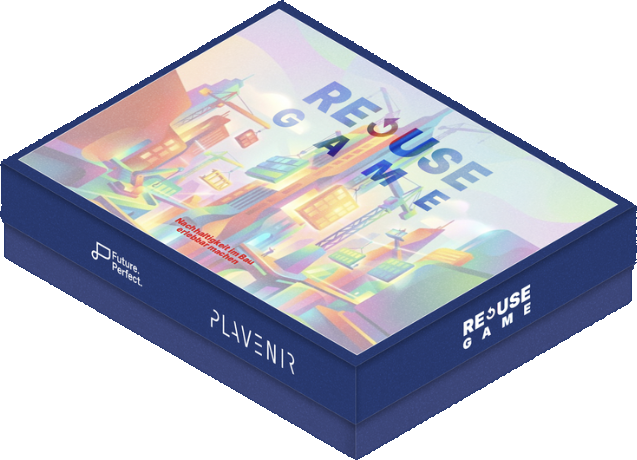
Should you buy new building components or reuse existing ones? Save costs or reduce CO₂ emissions? In the Re-Use Game, students – as well as staff from design consultancies – plan a construction project and make the decisions that arise on a daily basis in circular construction.
At a glance

90 minutes
Playing time, plus a brief introduction and a joint debriefing

6–8 people
per game, divided into teams that compete against each other as architectural firms

Inter-company training & more
for inter-company courses, vocational colleges, further training and planning offices

German
French and Italian will follow shortly
How the game works
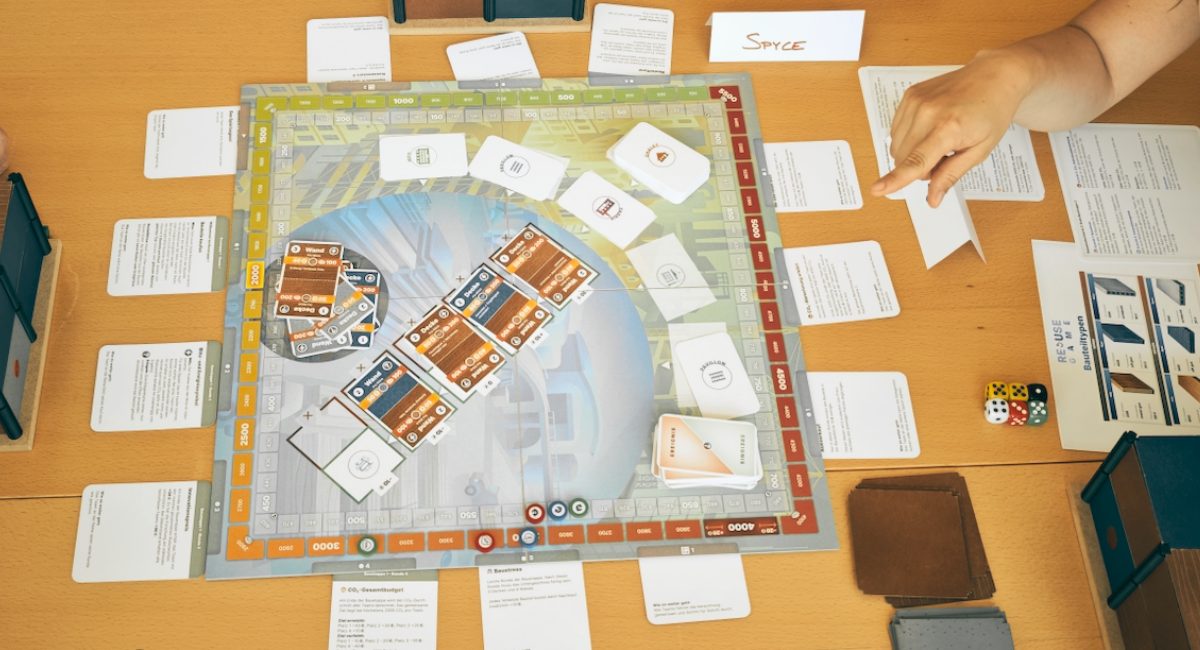
Who will come out on top when it comes to building the future? Not necessarily the team with the biggest budget, but the one that uses its resources wisely. The teams categorise building components made of timber, concrete and steel according to their properties and reusability, and construct their building step by step. This brings into sharp focus what often remains abstract in practice: conflicting objectives, risks and opportunities.
Re-use isn’t simply the ‘more sustainable option’. It requires planning, collaboration and, sometimes, a bit of courage.
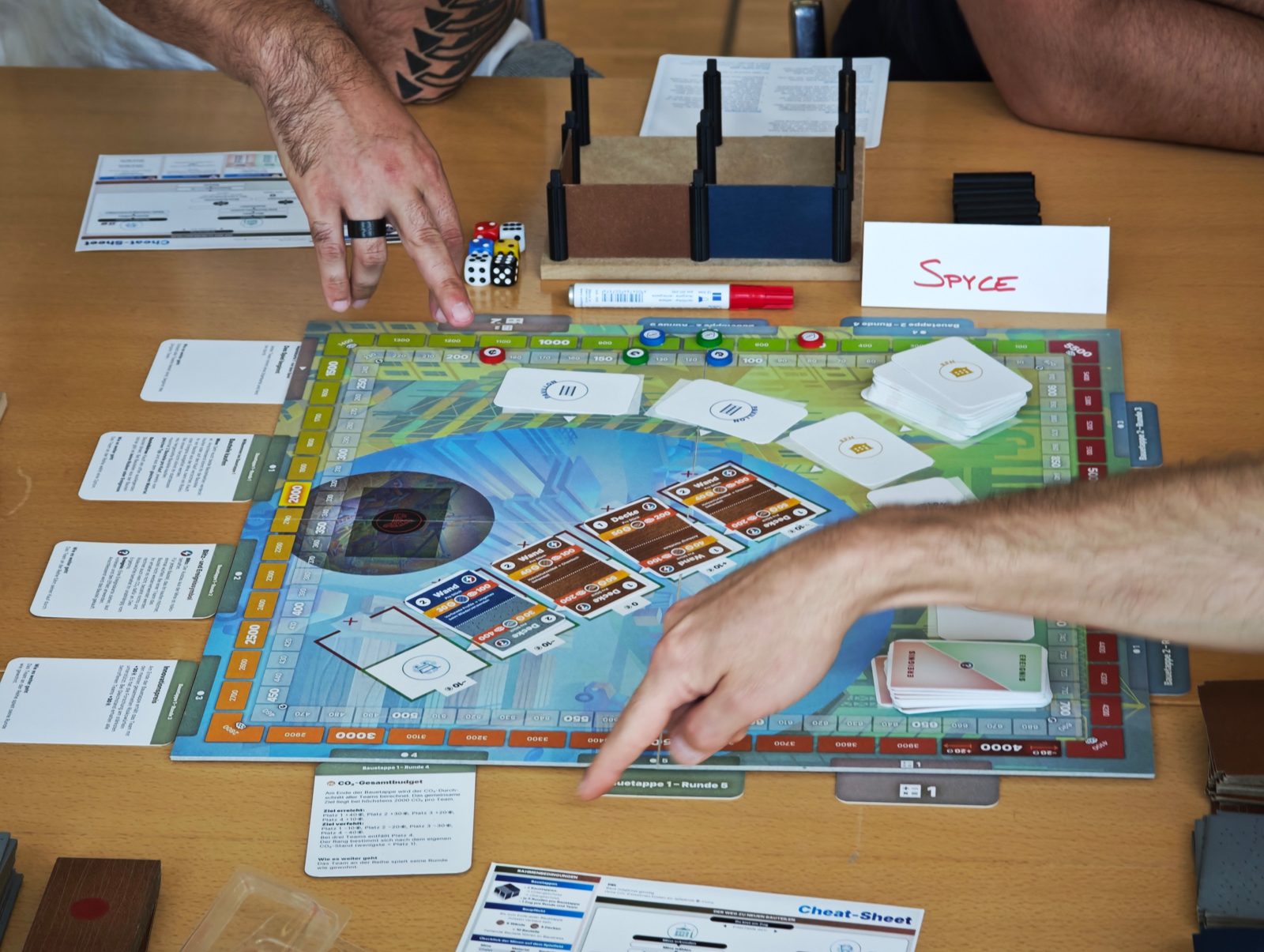
Select components
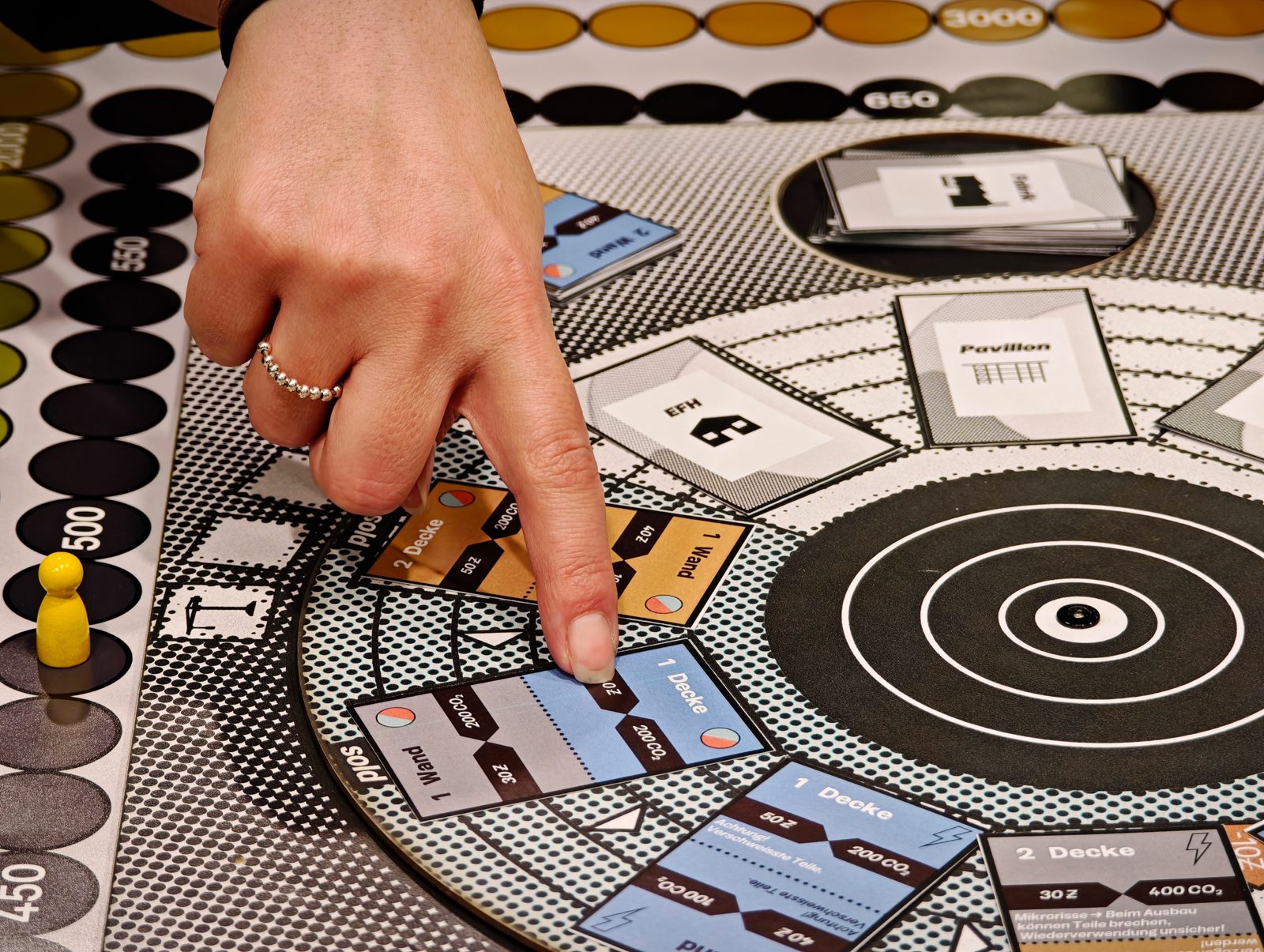
Buy new or reuse? Every component has its own price and carbon footprint.
Coping with events
Event cards bring surprises, such as welded parts or micro-cracks, which make reuse uncertain.
Building a model
The teams are constructing their building using the tactile 3D model, stage by stage.
Taking stock
Ultimately, both are important: the budget and the shared CO₂ target.
What’s in the box
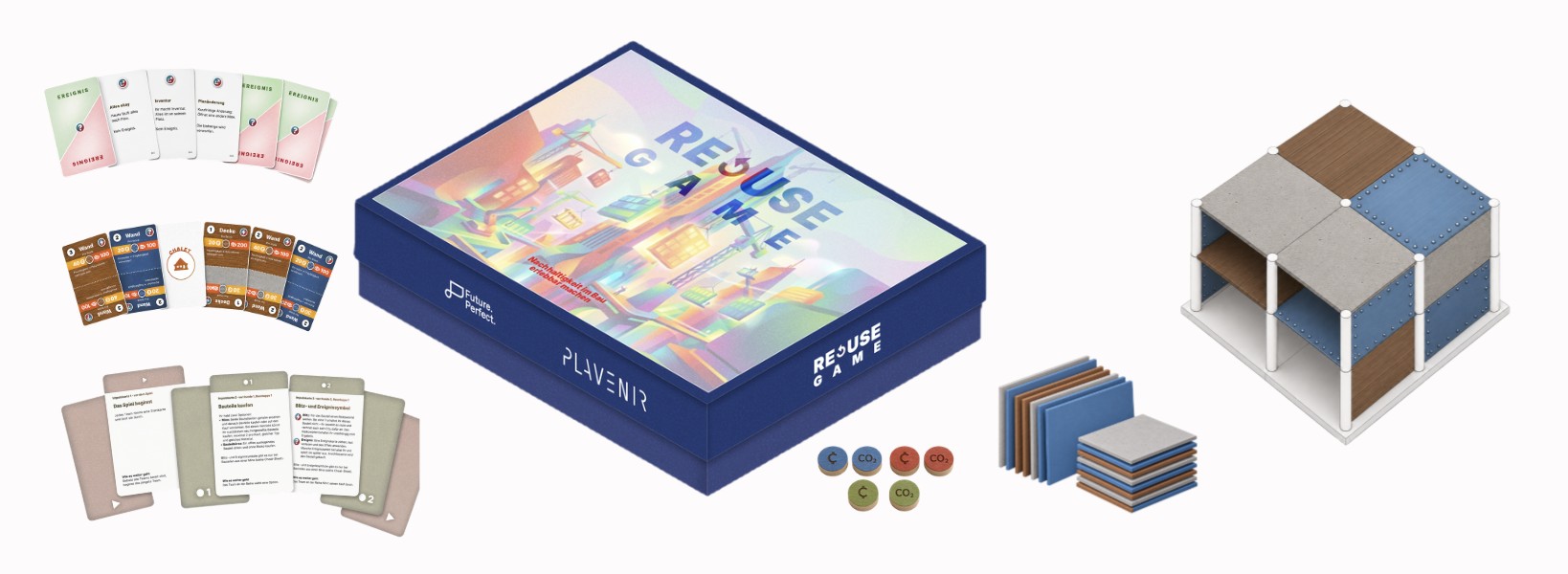
Game board, component and event cards, round cards, component tiles made of wood, concrete and steel, tokens for money and CO₂, and a 3D model to assemble.
Produced in Switzerland by Vögeli AG Marketingproduktion & Druck, 3Dstore.ch (FAIGLE 3D) and Zachoni Holzbau.
How a workshop works
The game is integrated into a workshop. Teachers receive training beforehand.
-
Arrival
A short quiz on grey emissions and reuse ensures that everyone is on the same page.
-
Explain the game
Roles, process and objective. A cheat sheet helps you get started.
-
Play
The teams plan and build under pressure: construction phase by construction phase, round by round.
-
Evaluate
A team review, changing tables, opportunities and challenges, and the three circular construction strategies: preserve, continue, and replan.
Learning objectives
Participants will be able to …

New or Re-use
…to explain the difference between new and reused components and to compare their impact on the life cycle assessment.

Materials
…to distinguish between components made of wood, concrete and steel in terms of their properties and reusability.
Making decisions as a team
…to make well-informed decisions as a team and to take different perspectives into account.

Weighing up
…to weigh up and justify the environmental and economic implications of material and procurement decisions.
For architecture and planning practices
The Re-Use Game is not intended solely for vocational training. Architectural and planning firms can also purchase it and use it within their own teams. It offers a playful introduction to the challenges and opportunities of circular construction: conflicting priorities between costs and CO₂, risks associated with reused building components, and the question of how early on reuse needs to be factored into the planning process. The game establishes a common ground and stimulates discussions about the firm’s own projects, for example at a team event, an in-house training session or together with trainees in the office.

Play the game yourself
You purchase the game and play it independently as a team, following the instructions.

Facilitated workshop
We’ll guide your team through the activity and debrief, and together we’ll reflect on the experience.
Impressions
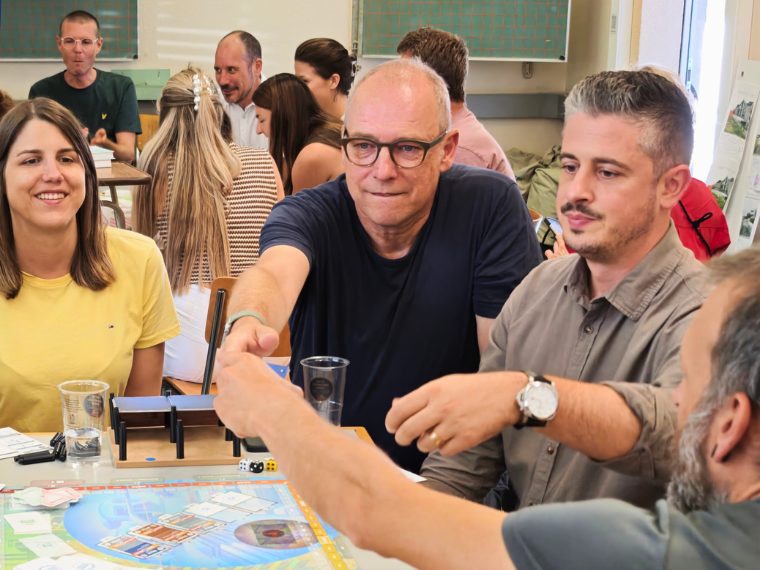
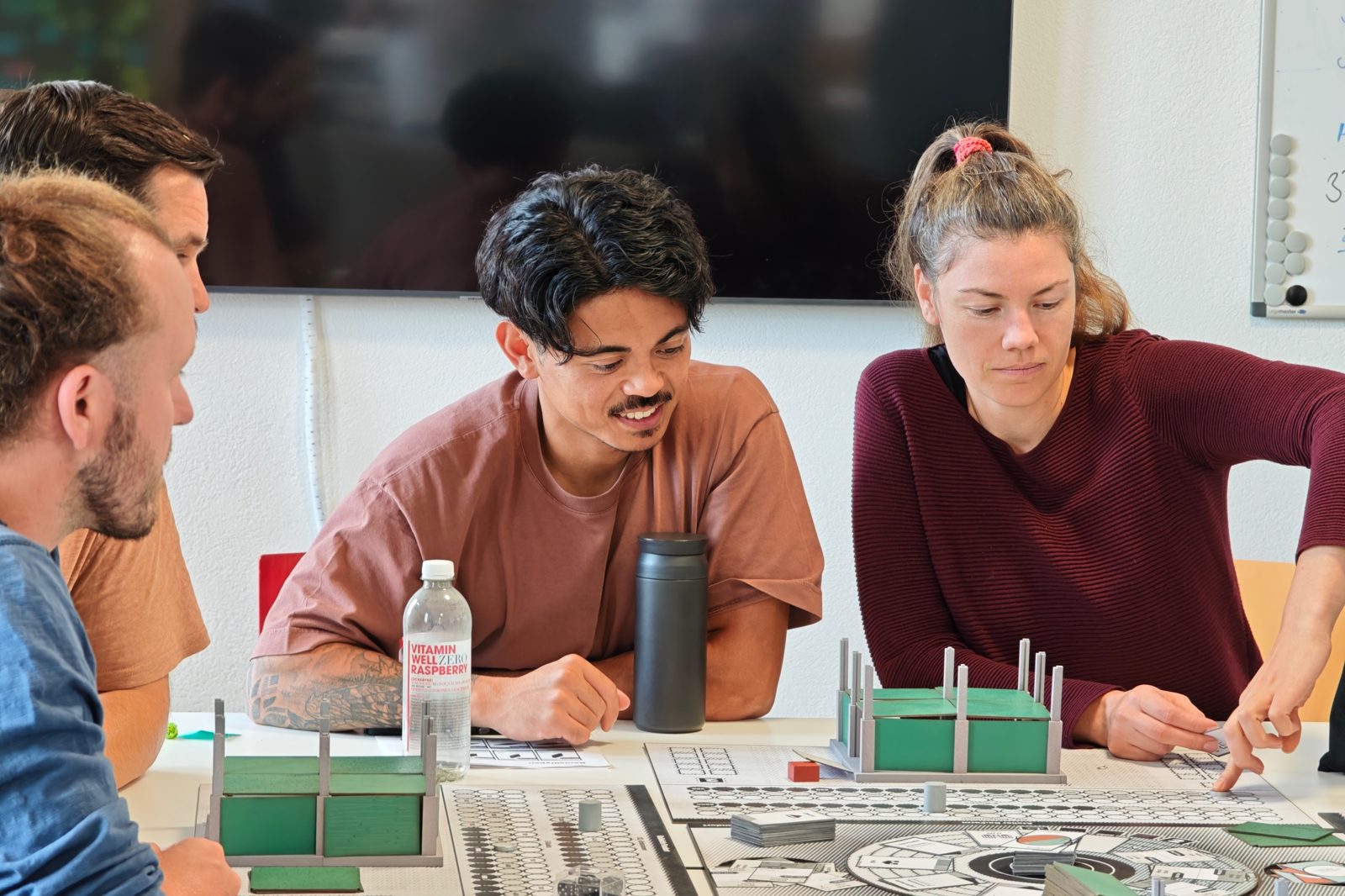
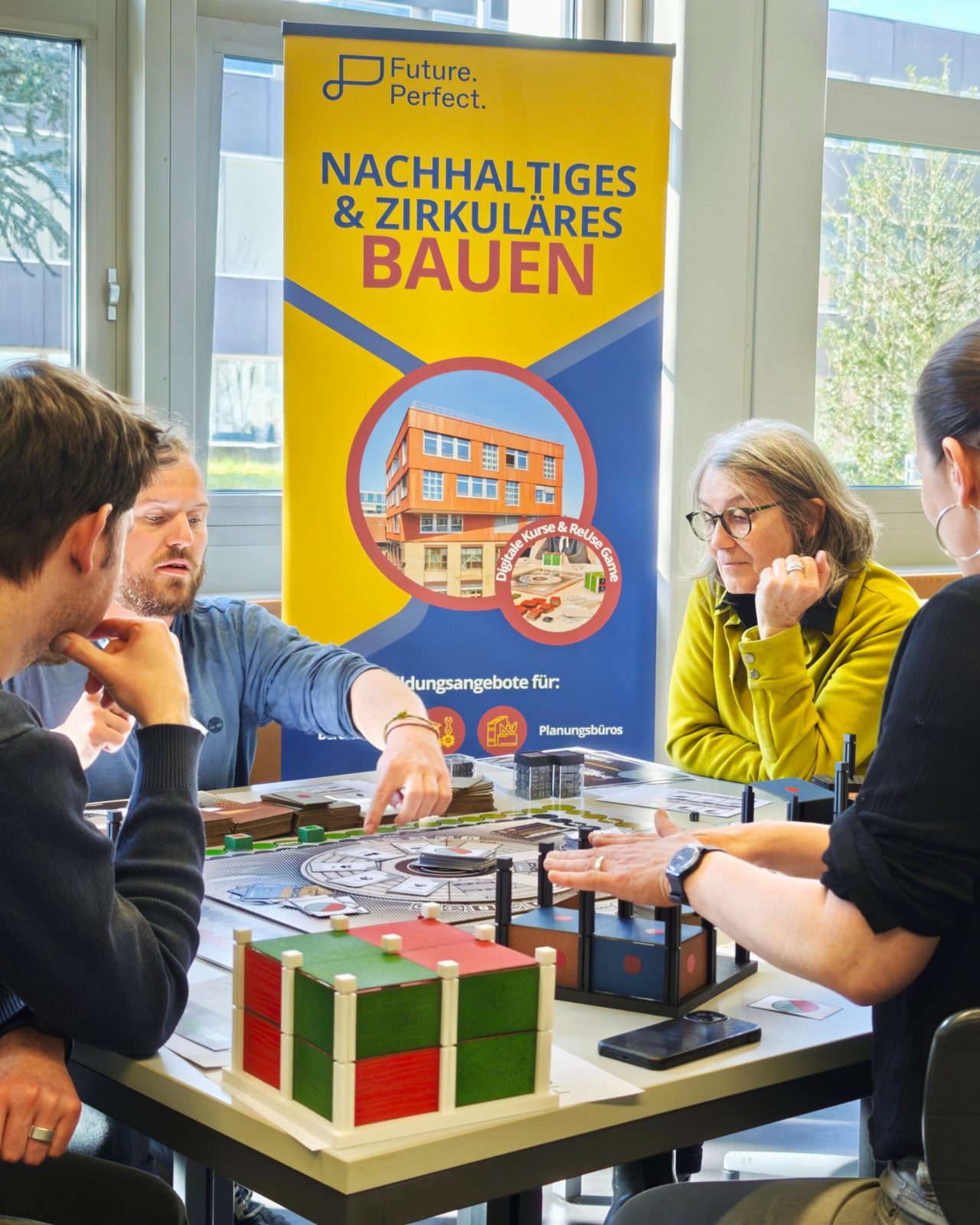
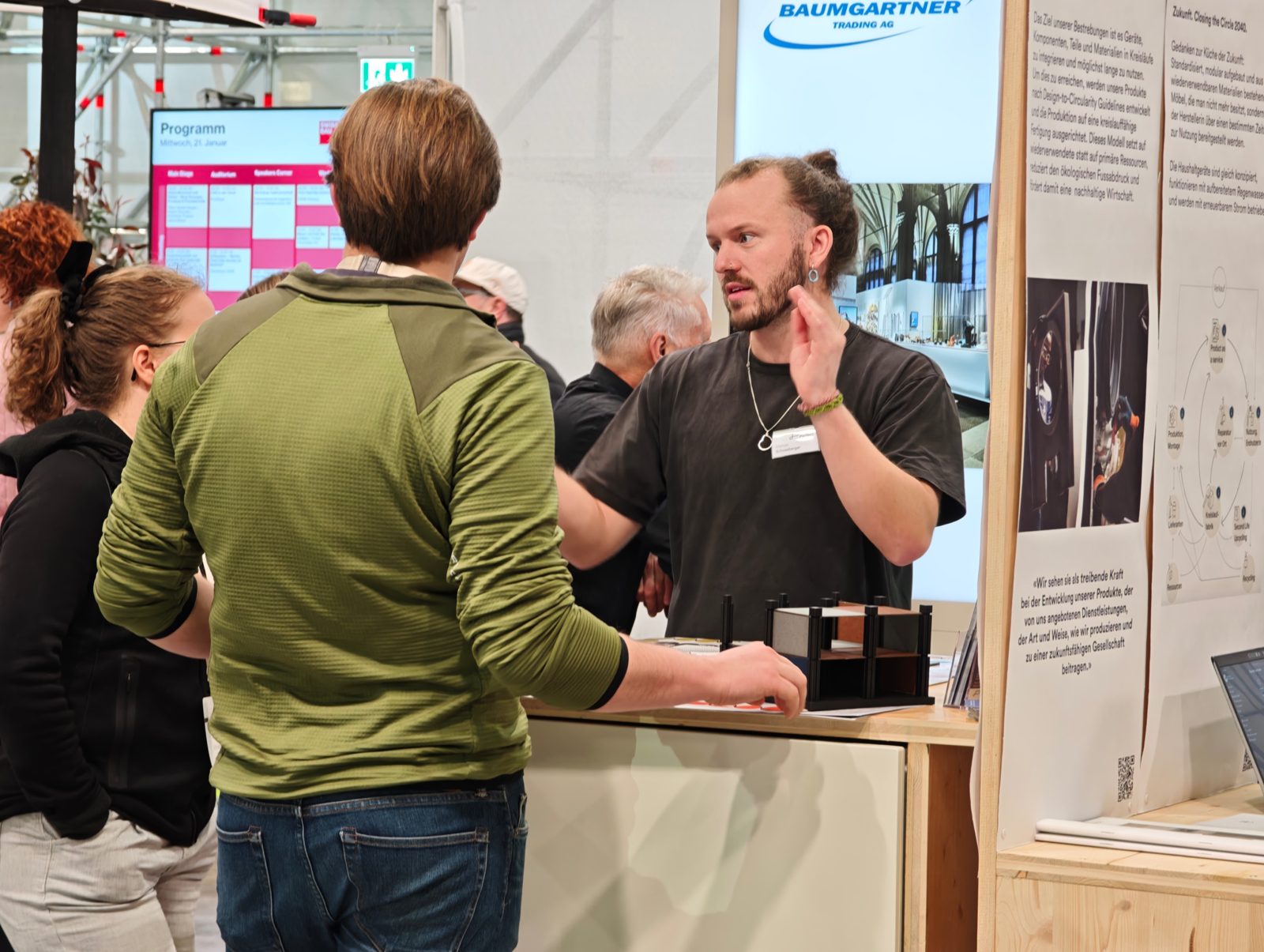
Developed with
-
Plavenir Project sponsorship

-
ZHAW Specialist Partner

-
game solution ag Implementation partner

Would you like to use the Re-Use Game?
We’d be happy to advise you on workshops, training and purchasing the game – for inter-company training, vocational colleges and design offices.